Mastering the Advance Authorisation Scheme: A Strategic Guide for Indian Exporters
In the competitive landscape of global trade, managing production costs is vital. The Advance Authorisation Scheme (AAS), a key initiative by the Directorate General of Foreign Trade (DGFT), remains one of the most effective tools for Indian exporters to reduce the tax burden on imported inputs.
As we move through 2026, understanding the nuances of this scheme—from Standard Input-Output Norms (SION) to export obligations—is essential for any manufacturing or merchant exporter.
What is the Advance Authorisation Scheme?
The Advance Authorisation Scheme allows for the duty-free import of inputs that are physically incorporated into an export product. This exemption covers several major duties, including:
- Basic Customs Duty (BCD)
- Integrated Goods and Services Tax (IGST)
- Anti-dumping Duty and Safeguard Duty
- Compensation Cess
Beyond raw materials, the scheme also permits the duty-free import of fuel, oil, and catalysts consumed during the production process. While this scheme focuses on raw materials, businesses looking to import machinery should explore the Export Promotion Capital Goods (EPCG) Scheme.
Who is Eligible to Apply?
To participate, you must hold a valid IEC (Importer Exporter Code). The scheme is accessible to:
- Manufacturer Exporters: Those who manufacture and export goods directly.
- Merchant Exporters: Provided they are tied to a supporting manufacturer.
- Intermediate Suppliers: Firms supplying inputs to an exporter holding an Advance Authorisation.
Key Compliance Metrics for 2026
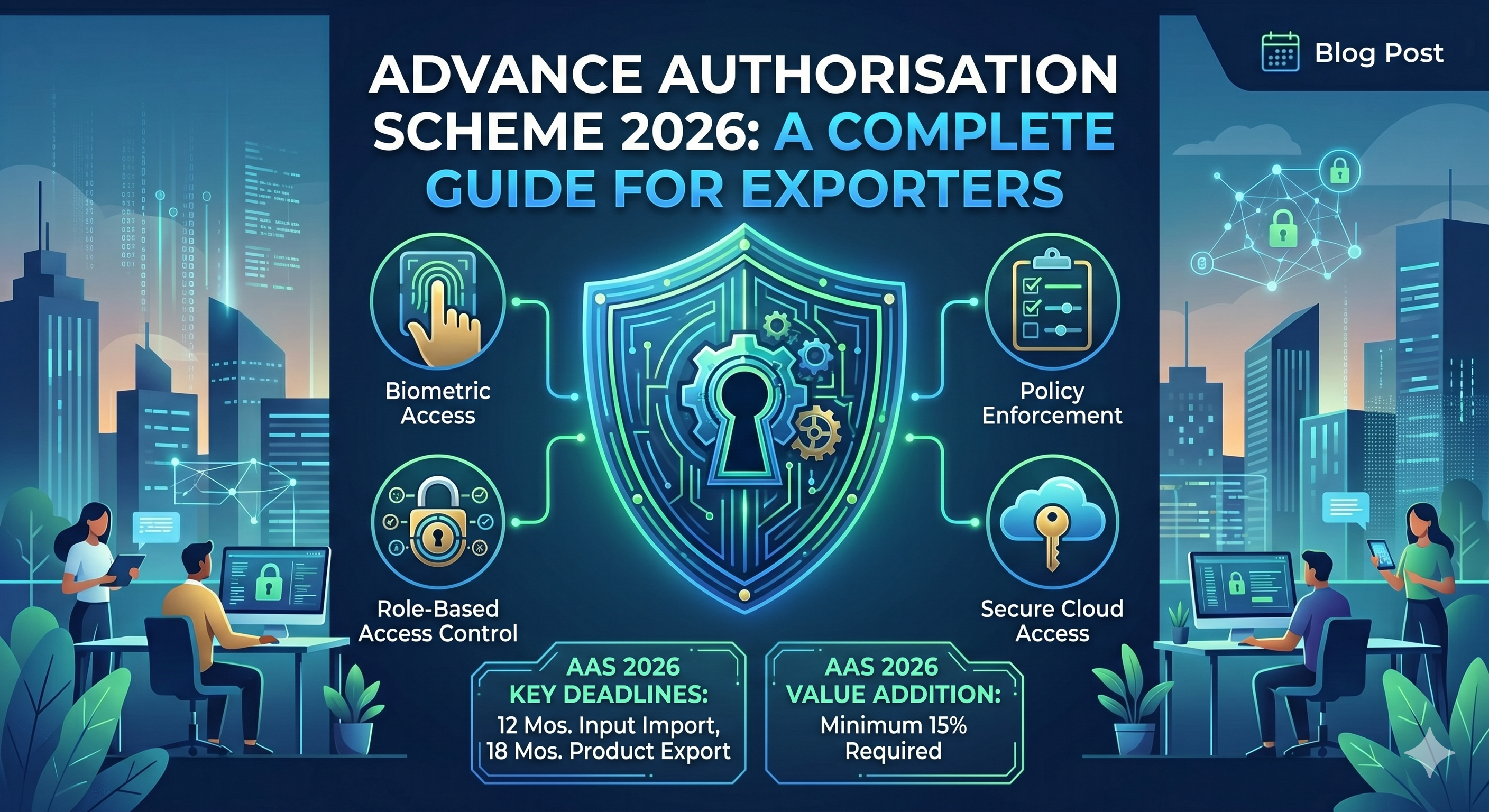
To successfully utilize the scheme, exporters must adhere to strict timelines and value-addition requirements:
| Requirement | Description |
|---|---|
| Minimum Value Addition | A minimum of 15% value addition is generally required. |
| Import Validity | Inputs must be imported within 12 months from the date of issue. |
| Export Obligation (EO) | The finished products must be exported within 18 months. |
The Importance of SION Norms
Authorizations are typically issued based on Standard Input-Output Norms (SION), which define the quantity of inputs allowed for a specific unit of output. If your product is not covered under SION, you may apply for Ad-hoc Norms via the Norms Committee or utilize the Self-Declaration route if you hold an Authorised Economic Operator (AEO) certificate.
Why Professional Liaison Matters
While the process is digitized, errors in wastage calculation or mismatched shipping bill details can lead to deactivation of your license or heavy penalties. Professional DGFT liaisoning services ensure that your documentation—from the initial ANF 4A form to the final EODC (Export Obligation Discharge Certificate)—is perfectly aligned with current policy.
Conclusion
The Advance Authorisation Scheme is more than just a tax saving; it is a cash-flow booster that allows you to reinvest saved duties back into your business operations.
Ready to streamline your export process? Contact LawExim & Associates at +91-9560138222 for expert guidance on your 2026 EXIM compliance needs.